
Does NFT halal or haram a billion-dollar question for practicing Muslims. According to Statista total market size of NFT will be 10 billion by 2028. Many Muslims are trying to dive into this space. Most Islamic scholars agree upon if any nft maintains Sariah compliance then the trading and holding of NFTs will be halal. But there are some contra arguments also exist on this topic too.
In this article, we will explore the concept of NFTs, their implications for Islamic finance, and whether they are considered as halal or haram in Islamic Sariah.
Basic understanding of NFTs (Non-Fungible Tokens):
Non-Fungible Tokens (NFTs) are unique digital tokens stored on a blockchain that represents an item of value, such as a digital asset (Like art, music, poem, calligraphy, even your first tweet), a physical good, or a service.
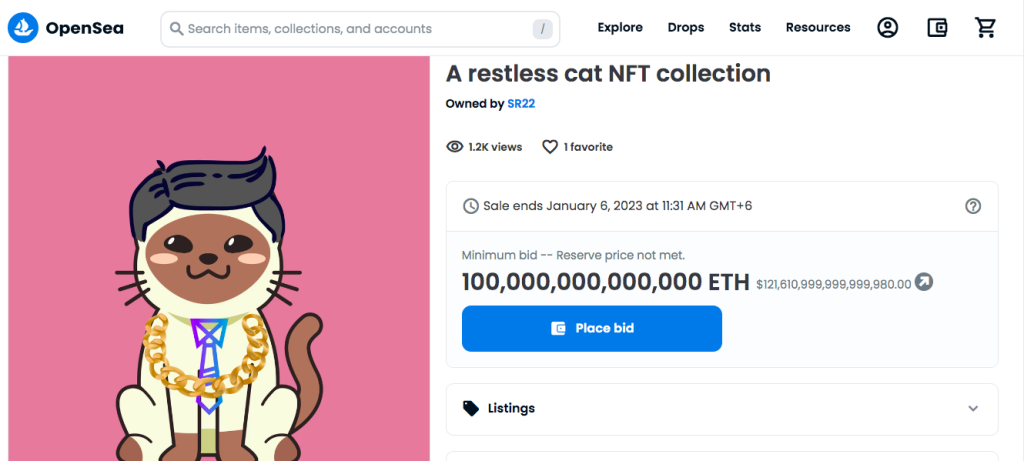
Unlike regular tokens, each NFT is unique and cannot be exchanged for an identical token. NFTs are used for a range of purposes, from proving ownership of digital art to verifying the authenticity of collectibles, to providing access to exclusive digital services.
In other words, NFTs are digital assets that represent real-world assets, such as artwork, collectibles, and in-game items. They are unique and non-interchangeable, meaning each NFT is one-of-a-kind and cannot be replicated.
Sharia compliance of NFT
NFTs are digital assets that are unique and cannot be exchanged for other assets. If you compare NFT with any other asset, the question of whether or not NFTs are halal or haram.
The answer is a complex one that requires consideration of the underlying asset and the intention of the investor.

Generally speaking, if the underlying asset is halal, then the NFT is also halal. If the underlying asset is haram, then the NFT is also haram.
It is important to note that the intention of the investor is also a factor if the investor is intending to use the NFT for gambling or other haram activities, then the NFT is also haram.
How does NFT halal in Islam?
When the question is NFT halal in Islam? The answer to this question is not a simple yes or no. There are many consideration factors regarding whether or not NFT is halal in Islam.
- The first factor either involves any form of gambling or speculation.
- The second factor is whether or not is used in usury.
- The third factor is whether or not it involves any form of deception or fraud.
- The final factor, Does NFT involves any kind of Riba.
NFTs are typically traded in a transparent manner. Where the buyer and seller both aware of the asset’s value and the terms of the agreement.
There are few lack of uncertainty ensures that neither party is exposed. So that the undue risk and that the transaction is fair. For these reasons, NFTs are considered to be halal in Islam.
The digital assets are not associated with any form of gambling or speculation, they do not involve any form of usury, they are not subject to any form of deception or fraud, and they involve minimal risk and uncertainty.
As such, they represent a viable investment opportunity for those who adhere to Islamic principles.
Five points why NFT is halal in Islam:
- NFTs is a halal form of investment because they are not tied to any physical asset, and the transactions are done through a secure blockchain system.
- They are not subject to any interest-based transactions, which makes them a halal form of investment.
- Non-fungible tokens do not involve any speculation or gambling, which makes them a permissible form of investment.
- NFTs are digital assets that can be bought and sold with no physical exchange of money.
- They are a form of investment that is transparent and secure, which makes them an ideal choice for those looking to invest in a halal way.
Why NFT haram in islam?
As NFTs gain popularity in our day-to-day life, One of the primary questions being asked is whether or not Non-Fungible Tokens are “haram”, or forbidden, in Islam. So, with that understanding of what an NFT is, is it haram in Islam?
In order to answer this question, it is important to first understand what makes an act haram in Islam. In general, any act that is seen as being against the teachings of the Quran or Hadith is considered haram.
In addition, if any act that is seen as being against the public interest. Such as gambling or bribery, is also consider as haram.
Given this understanding, it is clear that NFTs themselves are not haram in Islam. Unlike gambling or bribery, NFTs do not involve the exchange of money for something of no value. Rather, they are tokens that represent ownership of a digital asset.
Additionally, they are not seen as being against the public interest.
However, it is important to note that the way in which NFTs are used can be haram in Islam. For example, if an individual were to use an NFT to represent a form of gambling, such as a lottery, this would be seen as against the teachings of the Quran and Hadith and would be considered haram.
Additionally, if an individual were to use NFTs to engage in unethical or illegal activities, such as fraud or money laundering, this would also be seen as haram.
All in all, it is clear that NFTs themselves are not haram in Islam. However, it is important to note that the way in which they are used can be haram, depending on the context.
Five points why NFT is haram:
- NFTs are a form of digital asset that is not backed by any physical asset and therefore is not recognized by Islamic law.
- Islamic law states that any form of speculation is considered haram, and NFTs may be used as a form of speculation.
- Some consider NFTs do not have any intrinsic value, and therefore some Islamic scholars demotivate to invest in NFTs.
- NFTs are highly volatile and unpredictable, and therefore it is difficult to determine their true value.
NFTs can be used as a tool for gambling, and money laundering, therefore, is not permissible by the local government or Sariah.
What The holy Quran says about gambling:
“O you who believe! Intoxicants and gambling, dedication of stones, and divination by arrows, are an abomination of Satan’s handwork. Eschew such abomination, that you may prosper”
Quran 5:90
What Muslim scholar says about NFTs
“I strongly believe in enhancing shared prosperity through blockchain, tokenization, NFTs, and metaverse in the halal economy, including Islamic finance.”
Dr. Farrukh Habib
Co-founder
Nft gators.com
Muslim scholars express their opinion on Non-Fungible Tokens (NFTs) on different platforms. All of them are divided into three groups
The first group, Allows NFT, they thought nft is another form of digital asset if it is not used for any gambling, speculation, and illegal activities then it will be allowed in Islam.
The second group, They have the defensive thought that, as there is some scope for gambling or speculation it’s better not to go there.
The third group thought As it’s a new form of digital asset we must keep our eyes on it before going to say it halal or haram.
Overall, Muslim scholars have a positive outlook on the use of NFTs and believe that they can be used to create a safe and secure digital economy.
London-based sariah advisory firm, “Shariah Experts Ltd”, has issued the world’s first shariah compliance certificate on nft. The first receiver of this certificate is the Singapore-based gold crypto platform, Cache Gold.
Conclusion:
Yes, there are some gray areas either NFTs are halal or haram in Islam. As a practicing Muslim, you must take decisions based on The holy Quran and Sunnah. But we don’t find any clear reference about NFT there. But many Islamic scholars and researchers trying to explore this topic.
From our personal research, we can say if you follow other Sariah rules in treading and business those NFT treading also be halal. If you use NFTs for gambling, Usury, Ribah, money laundering, and other illegal activities then NFT will be treated as haram.